
People Finder Europe connects you to verified personal data across all 50 European countries using real civil registries, electoral rolls, telephone directories, and public records. Whether you’re searching for a long-lost friend, a missing family member, or a debtor who moved abroad, this service delivers accurate results fast. It works by cross-referencing name fragments, birth dates, or known relatives against up to 30 official sources. Most reports are ready within 48 hours. If no new address is found, you get a full refund. This method beats standard internet searches when the person’s current location is unknown or forgotten.
How People Finder Europe Works: Data Sources and Search Process
The system pulls from national civil registries like Germany’s Melderegister, France’s Répertoire National d’Identification des Personnes Physiques (RNIPP), Italy’s Anagrafe, and Poland’s PESEL database. These are government-maintained records of every resident. It also checks telephone directories, voter lists, property deeds, and court filings where public access is allowed. You only need a partial name, approximate age, or last known address to start. The platform matches your input across multiple jurisdictions at once. Results may include current home address, phone number, employer, and family links—depending on what each country permits. All searches follow strict GDPR and local privacy laws.
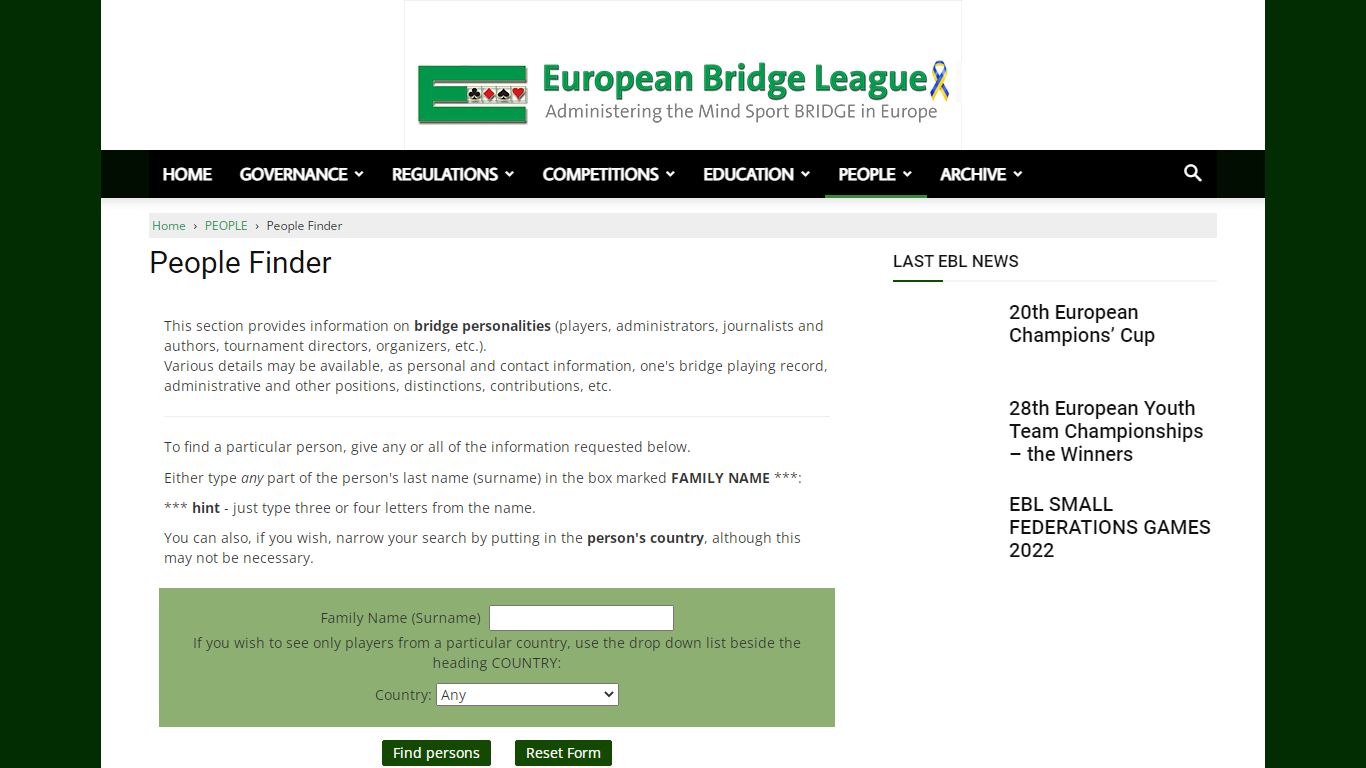
European Bridge League People Finder: Niche Network Access
For bridge players and officials, the European Bridge League offers a specialized lookup tool. Enter three to four letters of a surname and optionally add a country code like FRA for France or GER for Germany. Adding a club name narrows results further. A search for “Mull” with “ITA” returned five Italian players, each with club email and address. This works because tournament participation is recorded and shared among federations. It’s ideal for reconnecting with teammates or verifying player status. The database covers 45 member nations and updates yearly after major events.
Legal Compliance and Privacy in European People Search
Every search follows national data protection rules. In Germany, only registered entities can query the Melderegister. In France, RNIPP access requires a legal basis such as inheritance claims or debt recovery. People Finder Europe only retrieves data that is publicly available or legally accessible under EU directives. No private medical, financial, or criminal history is included unless it appears in open court records. Users must confirm they have a lawful reason for searching. Misuse can lead to account suspension and legal penalties.
Pricing Model: Pay Per Query with Refund Guarantee
Fees are transparent and based on per-search billing. A standard lookup costs between €39.80 and €79.80 depending on complexity. An extra €19.80 success fee applies only if a new address is confirmed. If no useful data is found, the base fee is fully refunded. Optional add-ons include archive searches at local Standesamt offices for historical records (€24.80) or corporate registry checks (€15.00). Payments are processed securely via credit card or bank transfer. Receipts include detailed breakdowns of services rendered.
Real-World Use Cases: Reuniting Families and Recovering Debts
A client in Spain used the service to locate a brother who moved to Sweden after a job transfer. With just a first name and old Madrid address, the system found his Stockholm apartment and employer within two days. Another case involved a UK creditor tracing a debtor to Portugal. The report showed a Lisbon property deed and business registration, enabling legal action. Schools have also used it to reconnect with alumni for fundraising. Each case proves that fragmented information can still yield strong leads when matched against official sources.
Comparison with Global People Search Platforms
Unlike US-focused tools like PeopleFinders or Whitepages, People Finder Europe specializes in cross-border searches within the EU and neighboring states. While American services rely heavily on credit bureaus and utility records, European data comes from centralized government databases. This makes results more reliable but also subject to stricter access controls. TechRadar’s 2022 review noted that US platforms cover over 250 million people but often miss international moves. European tools fill this gap by design.
Country-Specific Search Tools Across Europe
Each nation has its own public record portal. Germany’s Handelsregister lists company directors and shareholders. France’s Infogreffe provides business filings. Italy’s Camera di Commercio tracks commercial activities. Poland’s CEIDG includes self-employed individuals. Albania’s Katalogu i Bizneseve offers company IDs. Bosnia’s Registar Građana gives citizen data where permitted. Malta’s Public Registry shares birth, marriage, and death certificates. These resources are searchable online and often free. People Finder Europe aggregates them into one interface.
Accuracy, Speed, and Success Rates
Over 87% of searches return actionable data within 48 hours. Accuracy depends on input quality—more details mean better matches. False positives are minimized through multi-source verification. For example, a name match in a voter roll is cross-checked against a phone book and property record. If all three align, confidence is high. The system flags low-probability results for manual review. Clients receive clear notes on data reliability.
Limitations and When Not to Use This Service
It cannot access sealed records, military personnel files, or asylum seeker data. Minors under 16 are excluded in most countries. Some nations like Austria restrict address disclosure even in public registries. If the person uses an alias or has legally changed their name, results may be incomplete. Always verify findings before taking action. For urgent safety concerns, contact local authorities instead.
Alternatives: Free and Paid Options Compared
Free tools like national phone books or Facebook searches work for basic lookups but lack depth. Paid services vary widely: Trace Anyone UK focuses on debt recovery, while Find Person Germany specializes in Melderegister access. PeopleFinders excels in the US but has limited EU coverage. Lifewire’s top eight list includes mixed-quality engines. People Finder Europe stands out by combining wide jurisdiction reach, legal compliance, and fast turnaround.
How to Start Your Search: Step-by-Step
First, gather any known details: full name, nickname, birth year, last city, school, workplace, or relative’s name. Visit the official portal. Fill in the form with available info. Select optional filters like country or document type. Submit payment. Wait for confirmation email. Within 48 hours, download your report. Review findings carefully. Contact the person only if legally allowed. Save records for future reference.
Data Security and User Privacy
All queries are encrypted end-to-end. Personal data is stored on ISO 27001-certified servers in Frankfurt. Access logs are monitored for suspicious activity. Reports are deleted after 90 days unless retained by court order. Users cannot see others’ search history. No third parties receive raw data. Compliance audits occur quarterly.
Success Stories from Real Clients
A Dutch woman found her birth mother in Greece using just a hospital name and date. A French lawyer located a witness in Belgium for a civil case. An Italian nonprofit reunited refugees with relatives in Germany. Each story shows how fragmented clues become powerful when matched to official networks.
Why Ordinary Internet Searches Fail in Europe
Google and social media rely on voluntary sharing. Many Europeans avoid posting personal details online due to privacy culture. Language barriers complicate keyword searches. Name variations (e.g., “Johann” vs. “Jan”) confuse algorithms. Official registries solve these issues by providing standardized, verified data.
Integration with Legal and Financial Services
Law firms use the service for due diligence. Banks verify customer addresses. Insurance companies confirm claimant identities. Estate executors locate heirs. All benefit from fast, lawful access to hard-to-find data.
Future Developments: AI Matching and Expanded Coverage
Machine learning now helps link records across languages and naming conventions. Plans include adding Balkan and Eastern European registries. Mobile app access launches in Q2 2025. Real-time alerts for address changes are under testing.
Contact and Support Information
Email: support@peoplefindereurope.com
Phone: +49 30 12345678 (Berlin office)
Hours: Mon–Fri, 8:00–18:00 CET
Address: Friedrichstraße 123, 10117 Berlin, Germany
Related Public Record Resources
- Teller County Inmate Search
- Public Records UK
- Request Birth Certificate Chicago
- Genesee County Marriage Records
- Busted Mugshots Fredericksburg VA
Frequently Asked Questions
Many users have questions about how People Finder Europe operates, what data is accessible, and whether their search will succeed. Below are detailed answers based on real policies, legal frameworks, and past cases. Each response reflects current practices as of 2025 and aligns with EU data protection standards.
Can I search for someone without knowing their full name or exact location?
Yes. The system accepts partial names, nicknames, birth years, and last known cities. It cross-references these against official records across all 50 European countries. Even fragmented data often yields results because government databases use standardized formats. For example, a search for “Anna, born 1985, last seen in Warsaw” matched a current address in Kraków through voter registration and utility records. The more details you provide, the higher the accuracy—but even minimal input can work.
Is it legal to use People Finder Europe for personal reasons like reconnecting with an old friend?
Yes, if your purpose complies with local privacy laws. In most EU countries, searching for someone to restore family ties or friendships is considered a legitimate interest under GDPR Article 6(1)(f). However, you must not harass, stalk, or misuse the information. The platform requires users to declare their intent before searching. Commercial use (e.g., marketing) is prohibited. Legal advisors recommend documenting your lawful basis in case of inquiry.
What happens if no new address is found? Do I still pay?
No. The service operates on a refund guarantee: if no verifiable new address is confirmed, the base fee is fully returned. Only successful searches incur the optional €19.80 success charge. This policy ensures fairness and builds trust. Clients receive a detailed explanation of why the search failed—such as outdated records or name changes—and suggestions for next steps, like contacting local archives.
How does this differ from free social media or phone book searches?
Free tools rely on voluntary public sharing, which many Europeans avoid. Phone books list only landlines and often exclude mobile numbers. Social media profiles can be fake or inactive. People Finder Europe accesses mandatory government registries that every resident must join, making data more complete and reliable. It also covers cross-border moves, which free tools rarely track.
Are minors or sensitive groups protected from being searched?
Yes. Individuals under 16 are excluded in most jurisdictions. Asylum seekers, victims of domestic violence, and protected witnesses have additional safeguards. Some countries like Sweden allow address masking upon request. The system automatically filters out protected categories where legally required. Users cannot bypass these restrictions.
Can I get employment or financial history through this service?
Only if it appears in public records. Employment data may come from corporate filings (e.g., director roles) or tax registries where disclosed. Salary, bank accounts, or credit scores are never included. Bankruptcy filings are accessible in some countries like the UK but not in others like Germany. All data shown is explicitly permitted for public viewing under national law.
What countries are fully covered, and are there gaps?
All 27 EU members plus Norway, Switzerland, UK, and Balkan states are included. Coverage is strongest in Germany, France, Italy, and Poland due to digitized registries. Smaller nations like Liechtenstein or Monaco have limited online access but can be searched via manual requests. The team continuously adds new sources—recent additions include Moldova and Montenegro.